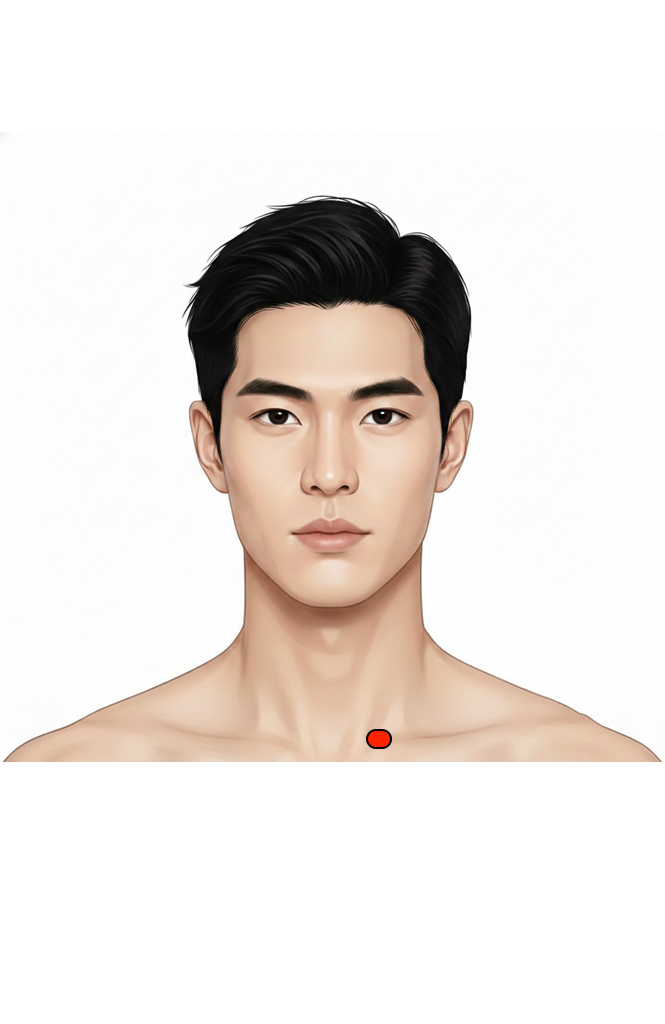
穴位别名:气舍(正名)。
English Aliases:
Qi Abode Point,
Qishe ST-11
穴位位置
在颈部,锁骨内侧端上方,
胸锁乳突肌胸骨头与锁骨头之间的凹陷处。
English (WHO Standard Description):
On the neck, above the medial end of the clavicle,
in the depression between the sternal and clavicular heads of the sternocleidomastoid muscle.
找穴方法
找到锁骨内侧端,
向上触摸胸锁乳突肌两头之间的凹陷,
有酸胀感处即为气舍穴。
English Method:
Locate the medial end of the clavicle,
Palpate upward between the two heads of the sternocleidomastoid muscle,
The tender depression marks Qishe
按摩手法
⚠️ 靠近颈部重要血管,操作需轻柔
指腹轻揉或按压
每次 30–60 秒
单侧操作,避免同时刺激双侧
Apply gentle fingertip pressure
Massage for 30–60 seconds
Avoid bilateral strong stimulation
针刺手法
针刺时垂直扎入皮肤0.3到0.5寸深(约1-1.5厘米)。进针后会有局部酸胀感。由于穴位深层有重要血管和肺脏,绝对禁止深刺。
穴位功效
宣肺理气,
通利呼吸,
缓解颈项紧张,
调节上焦气机。
English Functions:
Regulates Lung Qi,
Facilitates breathing,
Relieves neck tension
Harmonizes upper-body Qi flow
适用症状
咳嗽,
气喘,
呼吸不畅,
颈部紧张或疼痛。
English Indications:
Cough,
Asthma,
Shortness of breath
Neck tightness or pain
穴位禁忌
不宜重压,
心脑血管疾病者慎用,
孕期避免强刺激。
English Cautions:
Avoid deep or strong pressure,
Use caution in cardiovascular conditions,
Gentle stimulation only during pregnancy
穴位解说
气舍穴最早记载于西晋皇甫谧所著的《针灸甲乙经》,之后明代张介宾的《类经图翼》、清代吴谦的《医宗金鉴》以及明代杨继洲的《针灸大成》等经典医书均有收录。
西晋皇甫谧《针灸甲乙经》记载:气舍穴主治甲状腺肿大或颈部肿块(瘿瘤),以及肩膀肿胀导致颈部活动受限的症状。
明代张介宾《类经图翼》描述穴位定位:位于颈部胸锁乳突肌前缘,正对喉结外侧动脉搏动处(人迎穴)下方,紧贴胸骨上窝(天突穴)旁凹陷中。针刺深度三分(约0.9厘米),每次艾灸用五壮艾绒。
清代吴谦《医宗金鉴》讲述经脉走向:足阳明胃经的分支从大迎穴延伸,经过人迎穴、水突穴到达气舍穴,再向下穿过喉咙进入胸骨上窝(缺盆穴),连接胃和脾脏,将气血输送到全身脏腑。
明代杨继洲《针灸大成》定位记载:气舍穴位于颈部正中人迎穴下方,紧挨着天突穴的凹陷处。
《针灸甲乙经》:
“气舍,主咳逆,喘息。”
《针灸大成》:
“治喘急,胸闷。”
Classical Interpretation (EN)
Qishe (ST-11) has been traditionally used to regulate Lung Qi, relieve coughing, and improve respiratory function, especially in upper chest and neck disorders.