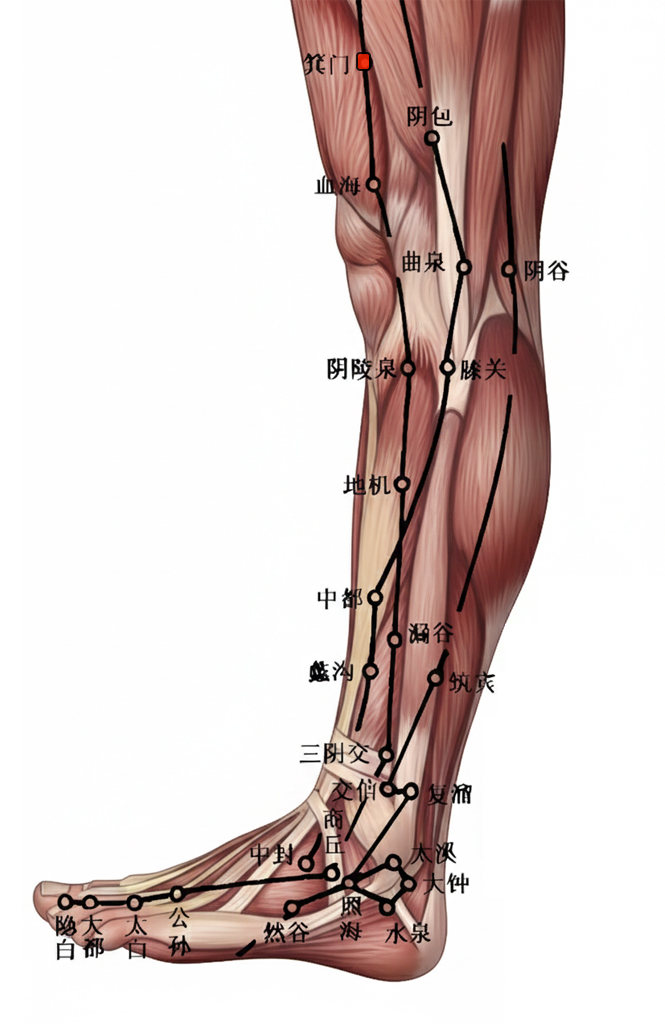
穴位别名:箕:簸箕,引申为聚集
门:出入口
👉 本穴为脾经气血聚集、出入之处,主治急性血证与疼痛
English Interpretation
Ji (Basket): gathering or collecting
Men (Gate): entrance or exit
→ SP-11 is a point where Qi and Blood accumulate and disperse, commonly used for acute blood disorders
穴位位置
在大腿内侧,股动脉搏动处,血海穴上 6 寸。
English (WHO Standard Description):
On the medial aspect of the thigh,
6 cun superior to SP-10 (Xuehai),
at the site of the femoral artery pulsation.
找穴方法
屈膝或仰卧位,
先定位 血海穴(SP-10),
从血海向上量 6 寸,
在大腿内侧可触及股动脉搏动处即为箕门穴。
English Method:
Patient in supine or seated position,
Locate SP-10 (Xuehai),
Measure 6 cun upward,
Palpate the femoral artery pulse to identify SP-11
按摩手法
手法:拇指或食指轻轻按揉,或点压穴位
力度:中等
时间:1–2 分钟
⚠️ 注意:靠近股动脉,避免深压
Technique: Gently knead or press the point using the thumb or index finger
Pressure: Moderate
Duration: 1–2 minutes
⚠️ Caution: Close to the femoral artery — avoid deep or strong pressure
针刺手法
垂直进针0.5~1.0寸。扎针时会有局部酸胀感,这种感觉可能向大腿内侧延伸,也可能向下传到脚踝附近。
穴位功效
凉血止血,
调经止痛,
缓解急性下腹与大腿内侧疼痛。
English Functions:
Cools blood and stops bleeding,
Regulates menstruation,
Relieves acute pain in the lower abdomen and medial thigh
适用症状
月经崩漏、经血不止,
急性痛经,
大腿内侧疼痛或肿胀,
下腹部急性疼痛。
English Indications:
Uterine bleeding, menorrhagia,
Acute dysmenorrhea,
Medial thigh pain or swelling,
Acute lower abdominal pain
穴位禁忌
靠近股动脉,禁止深刺或重按,
孕妇慎用。
English:
Close to the femoral artery — avoid deep needling or heavy pressure,
Use caution during pregnancy
穴位解说
箕门穴最早在《黄帝内经·素问》就有记载,《针灸甲乙经》这本古代医书详细记录了箕门穴的位置定位以及针刺和艾灸的具体操作方法。《千金要方》《外台秘要》等古代医疗著作中也都记载了通过针刺或艾灸箕门穴来治疗多种疾病的方法。
《素问·三部九候论》记载中提到:“下半身对应人体的足太阴经(即箕门穴所在经脉)...通过这个穴位可以观察脾胃功能的强弱”。这说明古人通过按压箕门穴能判断脾胃健康状况。
《针灸甲乙经》明确记载:“箕门穴位于大腿内侧肌肉隆起处,约在两块肌肉之间的凹陷位置,触摸能感受到动脉搏动。针刺深度约三分(约1厘米),保持针在穴位内大约六个呼吸的时间,每次艾灸使用三个艾炷的燃烧量”。这里不仅说明了穴位位置特征,还记录了具体的治疗参数。
《针灸甲乙经》:
“箕门,主血崩、腹痛。”
《备急千金要方》:
“治妇人经水不止,大腿内痛。”
Classical Meaning (EN)
SP-11 is classically used for acute blood disorders, especially sudden uterine bleeding and pain along the Spleen meridian.