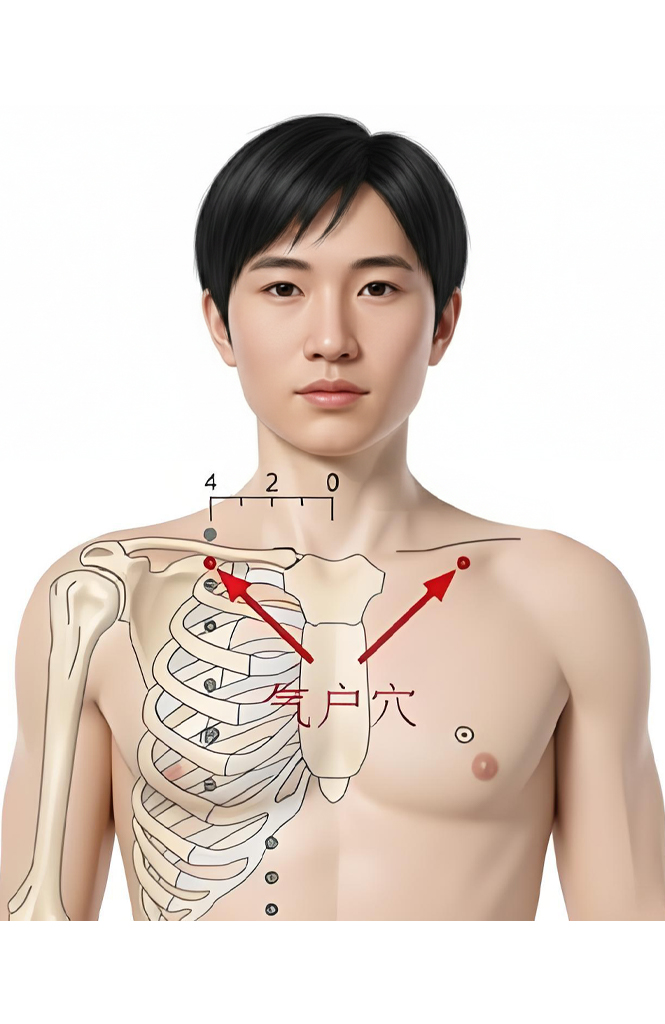
穴位别名:气户(正名)。
English Aliases:
Gate of Qi,
Qi Door Point,
Qihu ST-13
穴位位置
在胸部,锁骨中线下 2 寸,
前正中线旁开 4 寸,
位于第 2 肋间隙。
English (WHO Standard Description):
On the chest, in the second intercostal space,
4 cun lateral to the anterior midline,
2 cun below the clavicle.
找穴方法
找到锁骨,
向下量约两横指,
向外旁开约四横指,
在第二肋间凹陷处取穴。
English Method:
Locate the clavicle,
Measure 2 cun downward,
Move 4 cun laterally from the midline,
The depression in the second intercostal space marks Qihu
按摩手法
⚠️ 靠近肺部,不宜用力或深压
以指腹轻揉
每次 30–60 秒
呼吸配合按摩
单侧轮流进行
Use light fingertip pressure
Massage gently for 30–60 seconds
Coordinate with breathing
Treat one side at a time
针刺手法
沿着肋骨间隙向外斜着刺入0.5到0.8寸(约1.5-2.5厘米)。施针时要注意角度和深度,过深可能损伤肌肉或内脏器官。
穴位功效
宣肺理气,
通利胸廓,
止咳平喘,
调节乳房气血。
English Functions:
Regulates Lung Qi,
Opens the chest,
Relieves cough and asthma,
Supports breast circulation
适用症状
咳嗽,
气喘,
胸闷,
呼吸不畅,
乳房胀痛。
English Indications:
Cough,
Asthma,
Chest tightness,
Shortness of breath,
Breast distension or pain
穴位禁忌
不宜重压,
肺部疾病患者需专业指导,
孕期避免强刺激。
English Cautions:
Avoid deep or strong pressure,
Professional guidance recommended for lung conditions,
Gentle stimulation only during pregnancy
穴位解说
气户穴最早记载于古代医学典籍《针灸甲乙经》,后来在《针灸大成》和《百症赋》中也有相关描述。
《针灸甲乙经》记载:气户穴主要用于治疗胸胁部位胀满不适、呼吸急促喘息困难(感觉像用肩膀帮忙呼吸)、食欲明显减退等症状。
《针灸大成》提到:这个穴位能缓解咳嗽气逆、呼吸困难(感觉气息上冲难以平复),以及胸背部疼痛等病症。
《百症赋》特别指出:对于长期反复发作的胁肋部疼痛,配合使用气户穴和华盖穴治疗效果显著。
《针灸甲乙经》:
“气户,主咳逆,上气。”
《针灸大成》:
“治喘急,胸满。”
Classical Interpretation (EN)
Qihu (ST-13) has been traditionally used to regulate Lung Qi, relieve coughing, and open the chest, particularly for respiratory and chest disorders.