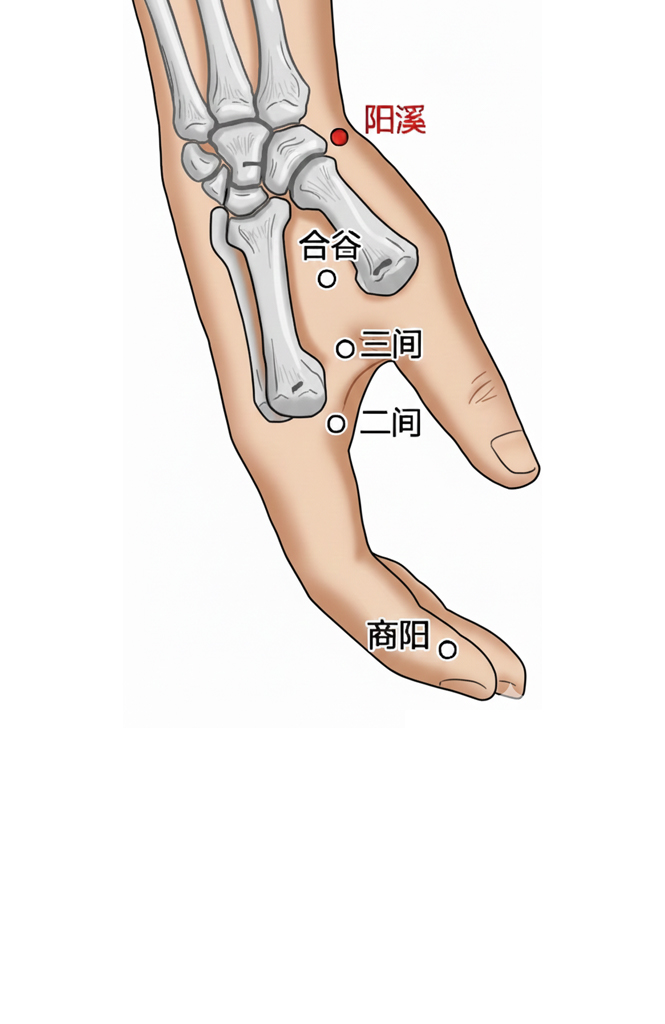
穴位别名:阳溪关,大肠经穴。
English Aliases:Large Intestine Jing-River Point,
Yangming River Point
穴位位置
在腕背桡侧,拇长伸肌腱与拇短伸肌腱之间的凹陷中,拇指上翘时最明显。
English (WHO-style Description):
On the radial side of the dorsal wrist, in the depression between the tendons of the extensor pollicis longus and extensor pollicis brevis, most visible when the thumb is extended.
找穴方法
手背向上,将拇指尽量上翘,可见两条明显肌腱,两腱之间的凹陷即为阳溪穴。
English Method:
Turn the hand palm-down,
Extend the thumb upward,
Identify the two extensor tendons,
The depression between them marks LI-5
按摩手法
拇指点揉或按压
力度中等
每次 1–2 分钟
腕部劳损、电脑手尤佳
Apply moderate thumb pressure or circular massage
Massage for 1–2 minutes
Especially effective for wrist overuse and strain
针刺手法
采用垂直进针法,刺入深度控制在0.5-0.8寸(约1.5-2.5厘米)。当患者感受到酸胀、发麻或轻微触电感的针感时,保持留针状态30分钟后取出。
刮痧手法
使用刮痧板呈45度角从阳溪穴上方向下刮擦2-3分钟,力度适中速度均匀,直至皮肤微微发红即可,不必强求出痧。
穴位功效
清热解表,通经活络,利腕止痛。
English Functions:
Clears heat and releases the exterior
Activates the meridian
Relieves wrist and arm pain
适用症状
腕关节疼痛、无力,
手臂酸痛,
发热、口渴,
头痛、目赤。
English Indications:
Wrist pain and weakness,
Arm soreness,
Fever and thirst,
Headache and red eyes
穴位禁忌
局部外伤、炎症时慎用,
不宜持续强刺激。
English Warnings:
Avoid use on injured or inflamed areas,
Do not apply excessive or prolonged pressure
穴位解说
阳溪穴最早记载于中医经典《灵枢·本枢》中,之后在《针灸甲乙经》《铜人腧穴针灸图经》《针灸大成》等古代医书中均有详细描述。
西晋皇甫谧在《针灸甲乙经》中提到:阳溪穴能治疗流鼻血、感冒发烧却不出汗、眼睛疼痛睁不开、头痛、蛀牙痛、莫名流泪、手脚发冷伴随头痛、胸闷呼吸不畅、疟疾伴有严重怕冷等症状。
唐代孙思邈的《备急千金要方》记载:阳溪穴擅长缓解手臂和手腕外侧的疼痛、活动受限等问题。
明代杨继洲在《针灸大成》中补充:按摩阳溪穴时,向下推揉可治疗小儿腹泻,女性患者则需反向操作。
宋代王执中的《针灸资生经》描述了一种牙痛灸法:弯曲大拇指根部关节,在凹陷处(即阳溪穴)艾灸三炷。初次艾灸会感觉病牙发痒,再次施灸能听到牙齿声响,第三次后疼痛消失且不易复发。左侧牙痛灸右侧穴位,右侧牙痛灸左侧穴位。
《灵枢·本输》:“经者,喘咳寒热。”
《针灸大成》:“阳溪主腕痛,热病烦渴。”
Classical Interpretation (EN)
Yangxi (LI-5) is the Jing-River point of the Large Intestine, traditionally used to treat wrist pain, febrile disorders, and Yangming heat conditions.