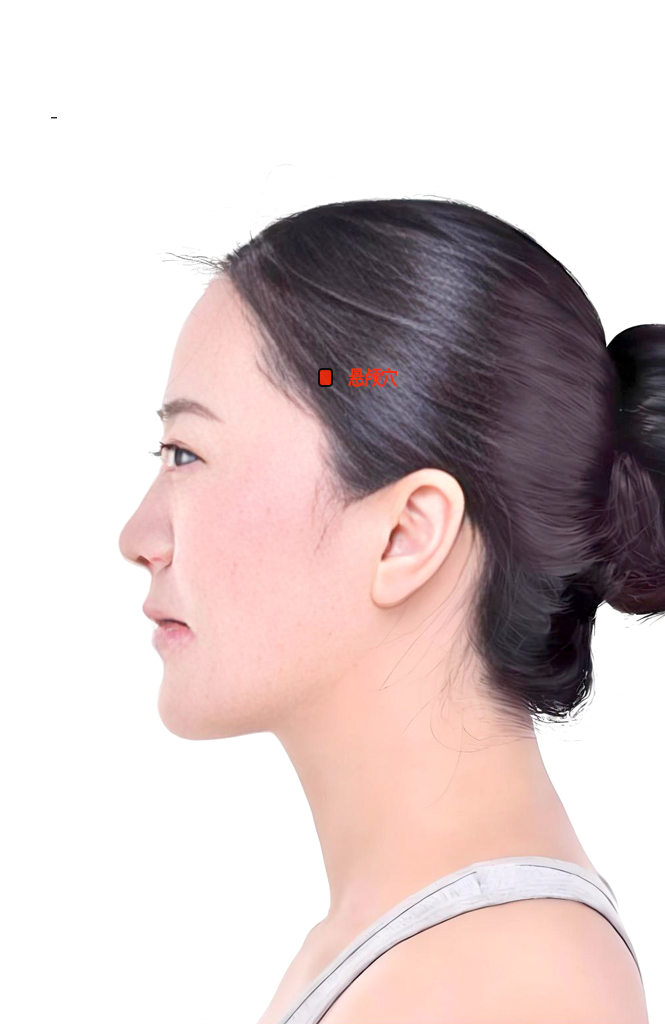
穴位别名:悬颅,
悬颅穴(全称写法)。
English Aliases:
Suspended Skull (GB-5),
Xuanlu,
Hanging Skull Point
穴位位置
在头部鬓发上,当头维与曲鬓弧形连线的中点处。English (WHO Standard Description):
On the head, at the midpoint of the line connecting Touwei (ST-8) and Qubin (GB-7).
找穴方法
找到额角附近的头维穴(ST-8),
再找到耳上方的曲鬓穴(GB-7),
在两穴连线的中点处,即为悬颅穴,
按压有酸胀感,多数人明显敏感。
English Method:
Locate ST-8 (Touwei) near the forehead corner,
Locate GB-7 (Qubin) above the ear,
Find the midpoint between these two points — this is GB-5
Pressing may produce soreness or distension
按摩手法
手法:指腹按揉或点按,可配合小范围旋转揉压
力度:中等
时间:1–3 分钟
技巧:偏头痛时可左右两侧同时按揉效果更好
Technique: Press and knead with the fingertip, or apply steady point pressure with gentle circular motion
Pressure: Moderate
Duration: 1–3 minutes
Tip: For migraine or unilateral headache, massaging both sides may enhance the effect
深度:平刺 0.5–1 寸
艾灸:一般不宜
English:
Insertion: Transverse insertion, 0.5–1 cun
Moxibustion: Generally not recommended
穴位功效
疏风清热,
通络止痛,
平肝潜阳,
清利头目。
English Functions:
Dispels wind and clears heat,
Activates channels and relieves pain,
Calms liver yang,
Clears the head and benefits the eyes
适用症状
偏头痛、头痛,
眩晕、头胀,
目赤肿痛,
牙痛、颌面痛,
神经性头痛。
English Indications:
Migraine and headache,
Dizziness and head distension,
Red and painful eyes,
Toothache and facial/jaw pain,
Neuralgic headache
穴位禁忌
不宜深刺,
头皮破损或感染时慎用,
按摩避免用指甲抓挠。
English:
Avoid deep needling,
Use caution if scalp is injured or infected,
Avoid scratching the scalp during massage
穴位解说
《针灸甲乙经》:
“悬颅,主头痛、目痛、偏风。”
Classical Meaning (EN)
GB-5 is traditionally indicated for headache, eye pain, and wind disorders.