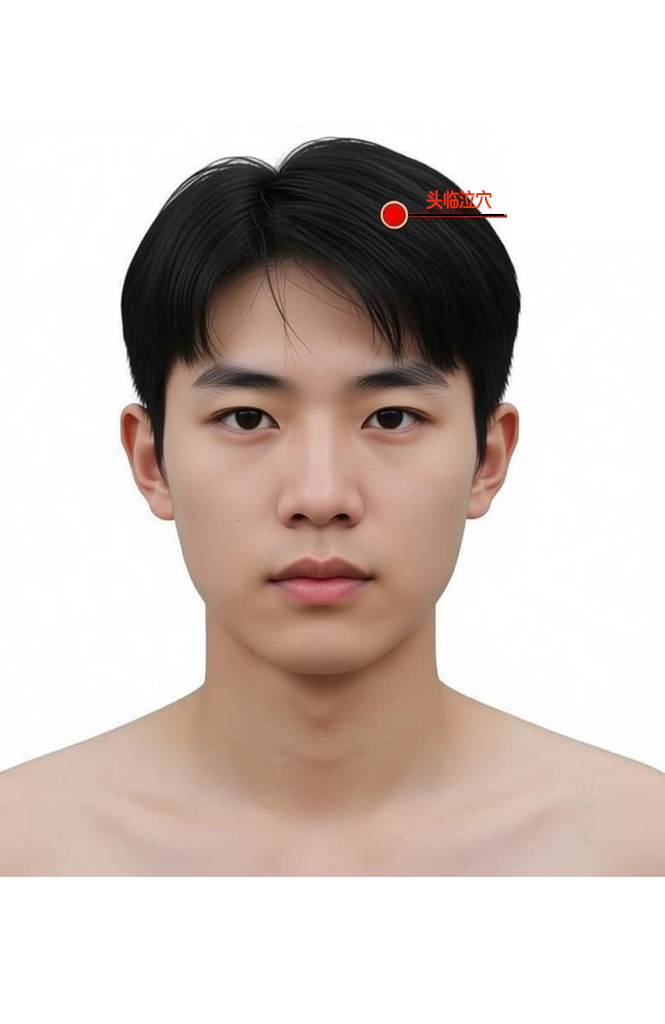
穴位别名:头临泣,
临泣(头部)(用于区分足临泣 GB-41)。
English Aliases:
Head Linqi (GB-15),
Toulinqi,
Head-Linqi Point
穴位位置
在头部,前发际上 0.5 寸,瞳孔直上,神庭(DU-24)旁开 1.5 寸处。
English (WHO Standard Description):
On the head, 0.5 cun superior to the anterior hairline,
1.5 cun lateral to the anterior midline, directly above the pupil.
找穴方法
找到前额发际线,
从发际向上量 0.5 寸,
再从头正中线旁开 1.5 寸(瞳孔直上),
按压有酸胀感处即为头临泣穴。
English Method:
Locate the anterior hairline
Measure 0.5 cun upward
Move 1.5 cun lateral from the midline (directly above the pupil)
The tender spot is GB-15 (Toulinqi)
按摩手法
手法:指腹轻柔按揉,或点按后缓慢揉压
力度:轻至中等(头皮敏感,避免过强)
时间:1–2 分钟
技巧:可配合前额向上推揉,有助缓解头胀、鼻塞
Technique: Gently press and knead with the fingertip, or apply steady pressure followed by slow circular rubbing
Pressure: Light to moderate (avoid excessive force on the scalp)
Duration: 1–2 minutes
Tip: Combine with upward rubbing of the forehead to help relieve head tightness and nasal congestion
深度:平刺 0.3–0.8 寸
艾灸:一般不宜
English
Insertion: Transverse insertion, 0.3–0.8 cun
Moxibustion: Generally not recommended
针刺手法
采用平刺法进针,深度控制在0.3~0.5寸(约成年人指甲盖宽度)。
穴位功效
疏风清热,
清头明目,
通鼻开窍,
止痛安神。
English Functions:
Dispels wind and clears heat,
Clears the head and benefits the eyes,
Opens the nasal passages,
Relieves pain and calms the mind
适用症状
头痛、额头胀痛,
眩晕,
鼻塞、鼻炎,
目痛、流泪,
失眠、烦躁。
English Indications:
Headache and frontal distension
Dizziness and vertigo
Nasal congestion and rhinitis
Eye pain and excessive tearing
Insomnia and irritability
穴位禁忌
不宜深刺,
头皮破损、炎症者慎用,
按摩避免用指甲抓挠。
English:
Avoid deep needling
Use caution if the scalp is injured or inflamed
Avoid scratching during massage
穴位解说
头临泣穴最早记载于《针灸甲乙经》,之后的《铜人腧穴针灸图经》《针灸大成》《类经图翼》等医书也都有收录。
《针灸甲乙经》记载:当头临泣穴出现问题时,会出现面部发冷、视力模糊、口水伴着眼泪流出、两眉之间及眼睛周围疼痛等症状,此时可以通过刺激这个穴位来治疗。
《铜人腧穴针灸图经》提到:头临泣穴能治疗突发中风导致的神志不清(不认识人)、头晕目眩、鼻塞不通、眼睛出现白色浑浊物(类似白内障)、经常无故流泪等情况。
《针灸大成》补充说明:这个穴位还可以缓解头晕、无故流泪、后脑勺与头骨交接处疼痛、怕冷鼻塞、癫痫发作时眼睛上翻、麻风病导致的外眼角疼痛,以及突发中风后意识丧失等症状。
《类经图翼》进一步记载:头临泣穴对鼻塞不通、眼睛发花有黑影遮挡、眼角分泌物增多且眼泪发凉、各类眼部疾病、癫痫时眼球上翻、突然中风不省人事以及胁肋部位疼痛都有治疗效果。
《针灸甲乙经》:
“头临泣,主头痛,目痛,鼻塞。”
Classical Meaning (EN)
GB-15 is traditionally used for headache, eye pain, and nasal obstruction.